



Launching a marketplace platform is a fundamentally different challenge from building a standard eCommerce store. The architecture, the business logic, the user flows: all of it is more complex, and the margin for getting it wrong is smaller.
Dafré is a marketplace starter kit built on Sylius Plus that gives development teams a serious head start when tackling that complexity.
The rise of marketplace business models
Marketplaces have become one of the dominant models in digital commerce. Amazon, Zalando, and Etsy demonstrated the value of offering products from multiple vendors and delivering them through a single, consistent customer experience. That model has since spread well beyond consumer retail.
B2B marketplaces are growing rapidly across industries, from industrial supply and building materials to software procurement and professional services. Companies are increasingly looking to build their own marketplace platforms rather than sell through someone else's, whether to gain control over distribution, create new revenue streams, or build defensible ecosystems around their products.
The demand is real and growing. The challenge is building and implementing.
What is Dafré?
Dafré is a marketplace distribution built on top of Sylius Plus, leveraging the Marketplace Suite module. It’s not a standalone product, but rather a reference architecture that gives teams a solid, well-thought-out starting point for building multi-vendor marketplaces.
Rather than beginning every marketplace build from scratch, Dafré packages together the core components a marketplace needs: the Sylius Plus Marketplace Suite, a selected set of plugins, a working frontend layout with pre-defined marketplace UX flows, and a code boilerplate prepared for further customization.
The entire setup was developed by the Sylius internal team based on real marketplace implementations. That experience is reflected in the marketplace architecture decisions, the integration choices, and the way the key marketplace scenarios are handled.
Dafré is not just a conceptual starting point, but a working reference implementation that demonstrates how a Sylius marketplace can operate in practice. It reflects a set of opinionated decisions about how marketplace platforms should be structured, based on what works in real-world projects.
In practice, Dafré functions as a proven starting point: a marketplace distribution that compresses the early stages of a marketplace project and reduces the amount of foundational work that needs to happen before meaningful product development can begin.
Key features of the Dafré marketplace starter kit
Dafré covers the full scope of what a functional multi-vendor marketplace requires. Here is a breakdown by area.
Marketplace core
The foundation of any marketplace platform is vendor management, and Dafré handles this through the Sylius Plus Marketplace Suite. This covers vendor registration and approval flows, product listing management, order splitting across vendors, commission and settlement configuration, and role-based access for all users on the platform.
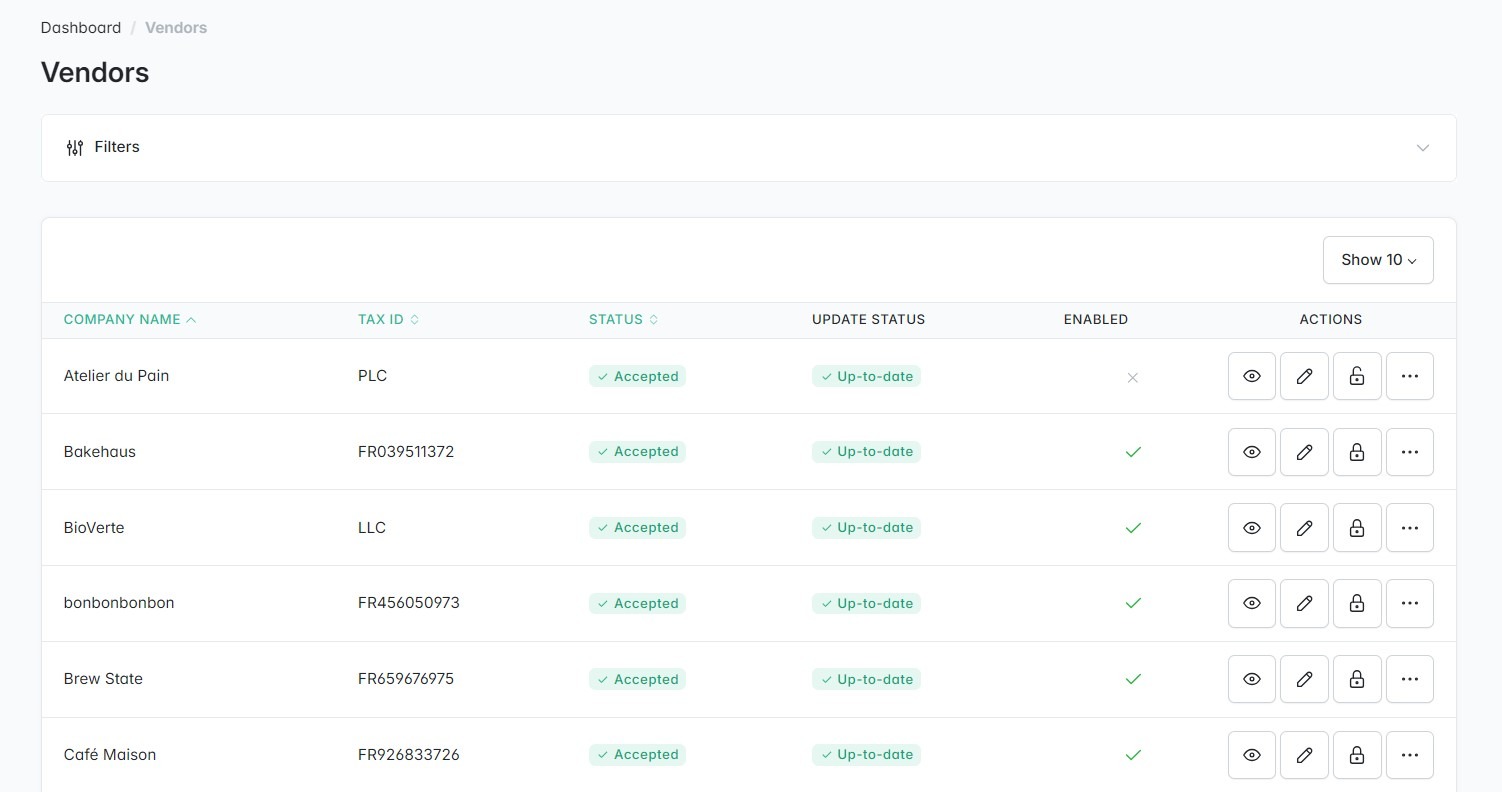
On top of that, we can leverage order splitting. In a multi-vendor marketplace, a single order often includes products from multiple sellers. Dafré handles this natively at the architecture level, automatically splitting orders by vendor, with separate fulfillment, shipping, and settlement flows for each of them.
Vendor tools
Vendors get a dedicated panel that visually and functionally mirrors the admin interface but is scoped to their own data and operations. From there, sellers can manage their orders, monitor their margin, handle customer communication through a built-in messaging module, and manage their product catalog through a draft-and-approval workflow.
Product drafts are versioned in the database, which means there is a full history of changes to every product listing. Vendors also have access to product reviews, limited to verified purchasers only, which keeps the feedback system grounded in real transactions.
Customer experience
Dafré includes a location selector on the homepage that filters the product catalog based on the customer's delivery region before they ever start browsing. This solves a friction point that often surfaces late in the checkout flow on marketplace platforms: discovering that a product cannot be shipped to your location after you have already spent time selecting it.
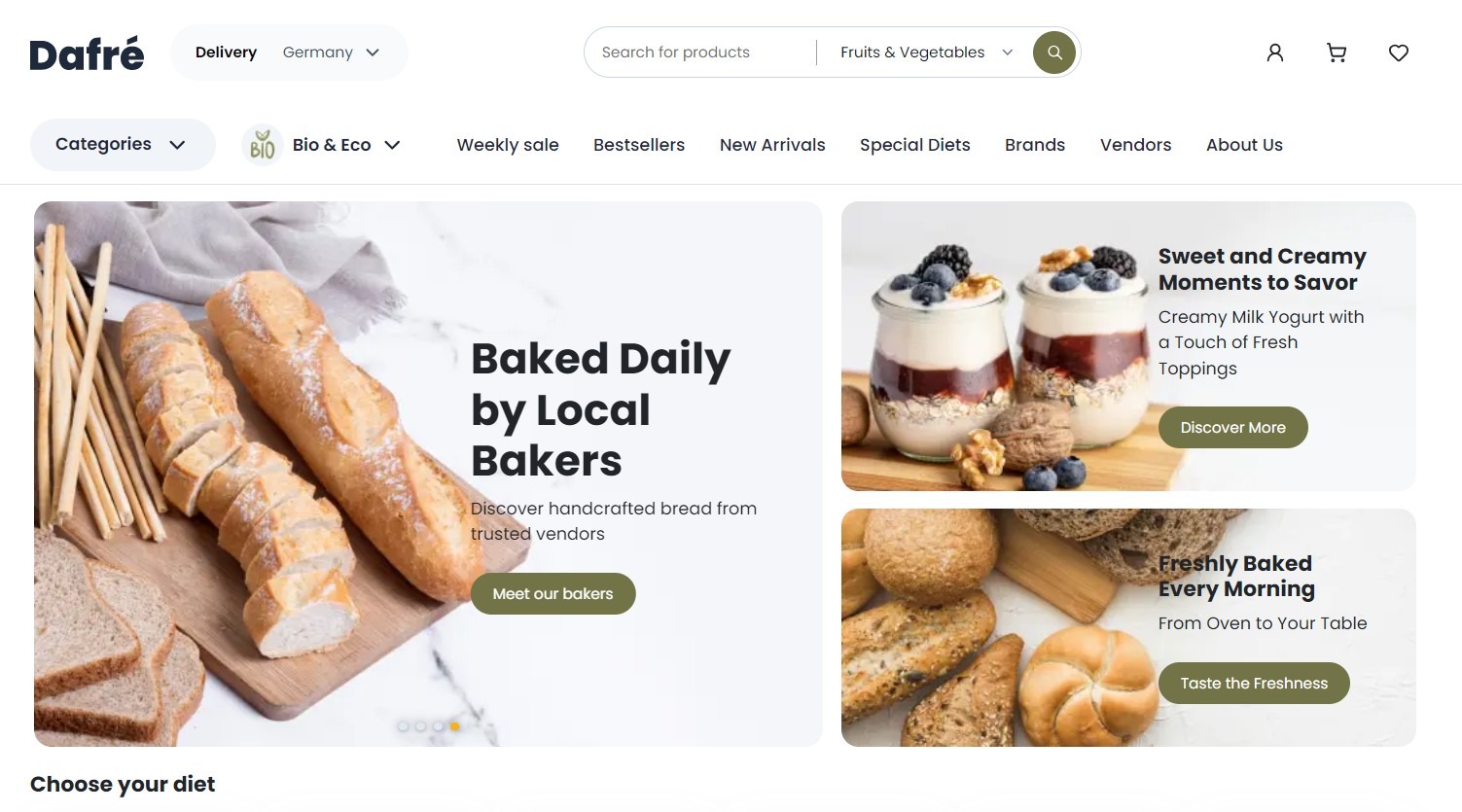
Search is handled by the Elasticsearch plugin, which powers both the main search bar and the category filtering. At scale (the reference build demonstrates this with around 15,000 products), Elasticsearch makes a meaningful difference to usability and performance.
Additional customer experience features include wishlists, a loyalty system via the Sylius Plus Loyalty module, and product bundles.
Platform infrastructure
Dafré's infrastructure layer includes the CMS plugin for managing banners, pages, and promotional content without touching the codebase, the Invoicing plugin, Mollie and PayPal for payment processing, and the Returns Management module for handling returns and complaints.
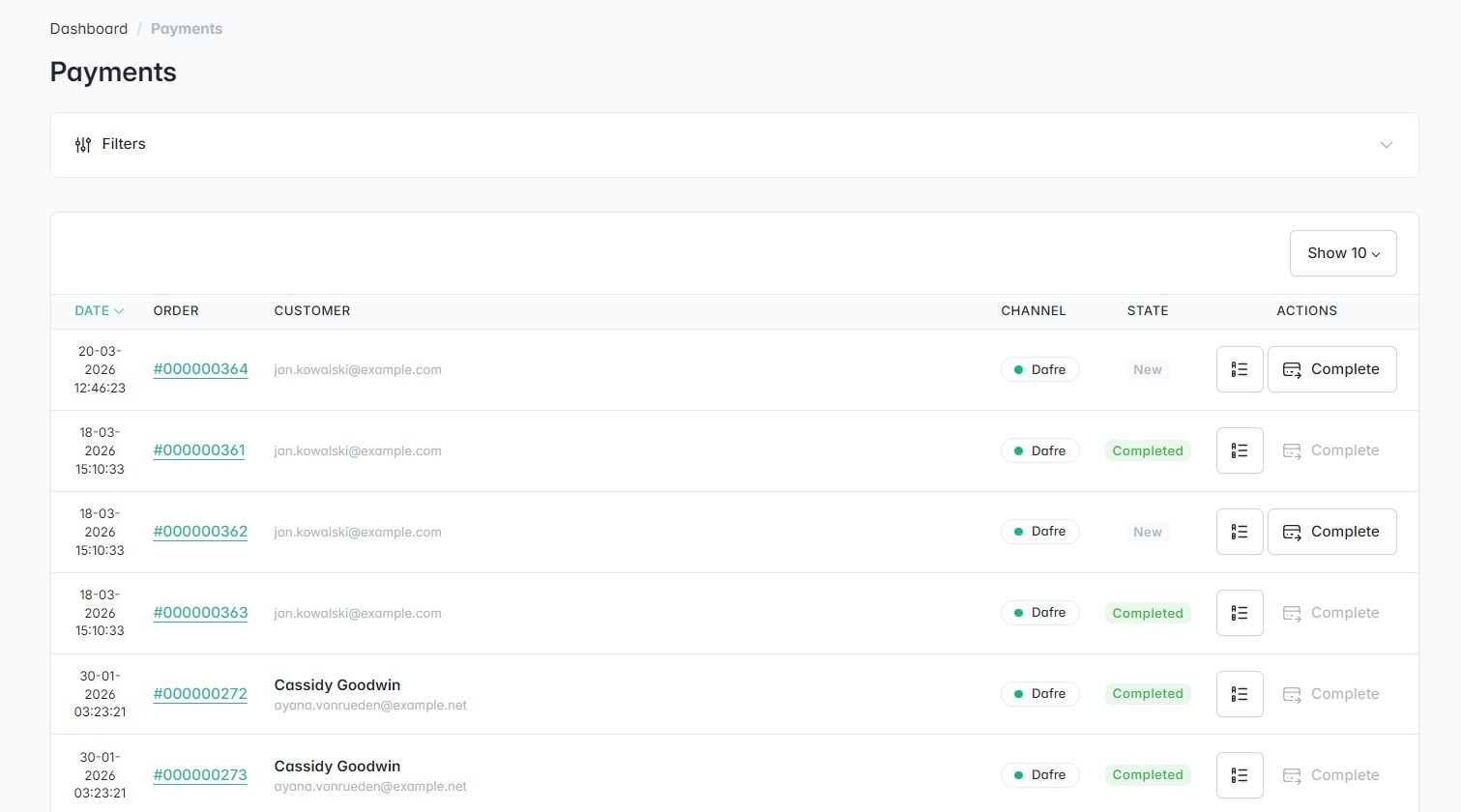
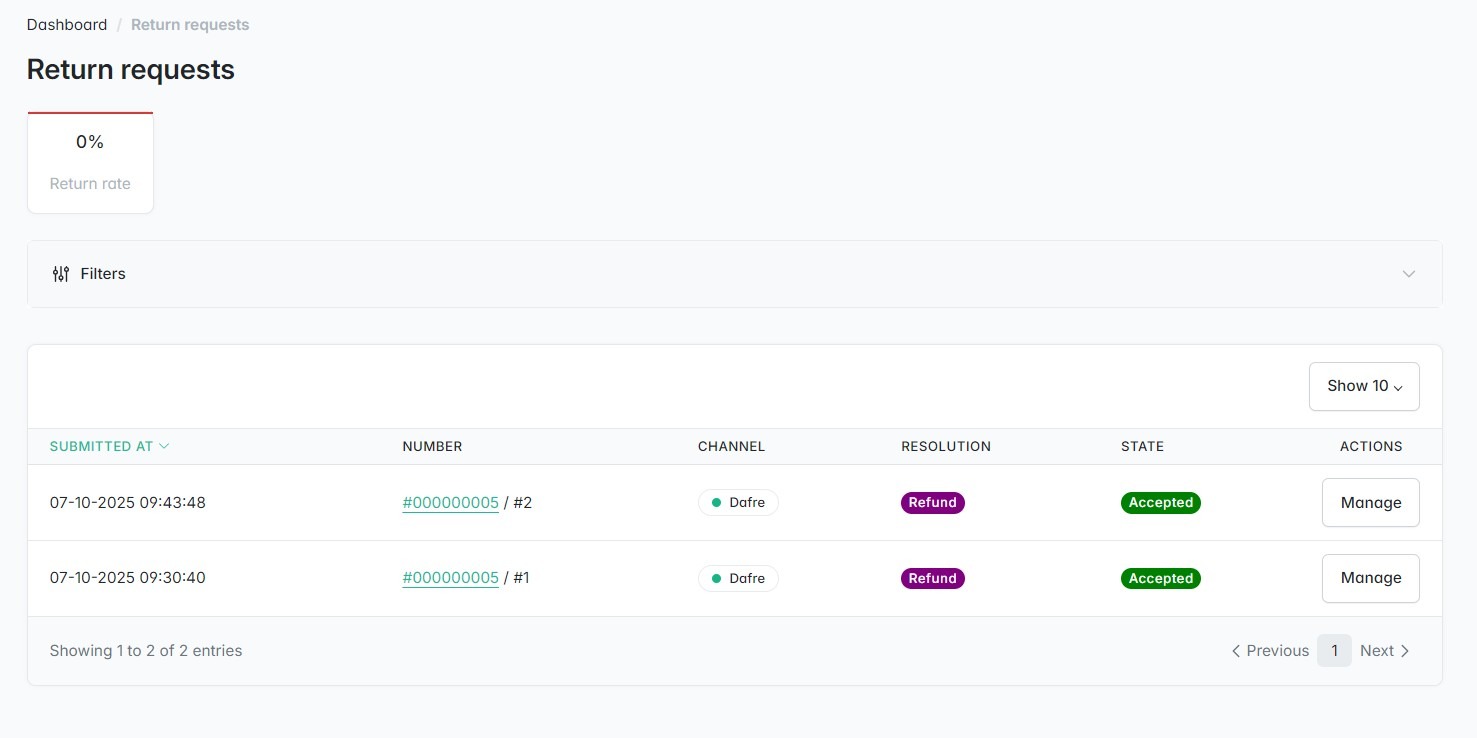
They are pre-integrated into the reference architecture and work together out of the box, reducing the need for custom integration work at an early stage.
<div class="rtb-text-box is-blue-50">Check out the Dafré demo >>></div>
Technical challenges in marketplace platforms
Building a marketplace platform from scratch means confronting a set of architectural problems that do not appear in standard eCommerce projects. Understanding these challenges is a useful context for understanding what an accelerator like Dafré actually addresses.
Vendor onboarding and moderation
Every marketplace needs a reliable process for bringing vendors onto the platform and maintaining quality over time. This means registration workflows, approval mechanisms, and ongoing moderation of product listings and seller behaviour. Without a clear structure in place, onboarding and moderation tend to become inconsistent or turn into bottlenecks.
<div class="rtb-text-box is-blue-50">In Dafré, vendor onboarding goes through a structured approval process in the admin panel, and product listings follow a draft-and-review flow. This gives platform operators control, without forcing them to manually handle every single step.</div>
Payments and commission management
In a standard store, payment processing is straightforward. In a marketplace, it involves splitting revenue between the platform and multiple vendors, tracking commissions, and managing settlement schedules that may differ by seller.
<div class="rtb-text-box is-blue-50">Dafré handles this through the Marketplace Suite's settlement configuration, which supports both cyclical settlement models (weekly, quarterly, annual) and a virtual wallet model where funds accumulate in vendor accounts and can be withdrawn on demand. Administrators configure margin rules and commission rates from a central settlements panel.</div>
Logistics and shipping across vendors
Shipping in a marketplace is naturally more complex than in a single-vendor store. Each seller might operate in different regions, use different carriers, and have their own rules and pricing. Still, from the customer’s perspective, it should all feel like one smooth, consistent experience, no matter how many vendors are involved in the order.
<div class="rtb-text-box is-blue-50">Dafré addresses this through vendor-level shipping method configuration, the location-based product filtering at the homepage level, and per-vendor free shipping thresholds in the cart. The cart also surfaces estimated delivery times based on shipping method configuration, so customers know what to expect before they reach checkout.</div>
Product catalog governance
On a multi-vendor platform, the quality and consistency of the product catalogue depends on how well the platform controls what vendors can publish. Without clear governance, catalogues become inconsistent and difficult to search or browse.
<div class="rtb-text-box is-blue-50">Dafré's draft-and-approval flow gives administrators oversight of every product before it becomes visible on the platform. Drafts are versioned, so there is a full audit trail of changes. Vendors can manage their own attributes and stock levels, but publishing requires admin sign-off.</div>
Why marketplace distribution matter
The argument for using distribution like Dafré is straightforward: building marketplace architecture from scratch is expensive and time-consuming, and it is well-trodden ground. The problems have been solved before.
An distribution brings several concrete benefits to a project.
- Faster development: The foundational work (integrations, plugin configuration, frontend structure, core marketplace flows) is already done. Development teams can focus on what is specific to the client's business model rather than rebuilding generic infrastructure.
- Proven architecture: Dafré is based on real implementations, not theoretical design. The architectural decisions reflect experience with how marketplace platforms actually behave at scale and under real operational conditions.
- Reduced project risk: Untested marketplace architecture is a source of significant project risk. Using a reference implementation that has been validated reduces the likelihood of discovering fundamental issues late in a build.
- Faster MVP: Getting to a working marketplace faster means earlier validation of the business model, earlier feedback from vendors and customers, and more time for iteration before the platform needs to perform at full scale.
When Dafré is the right starting point for a marketplace
Dafré is not the right fit for every project. It is most valuable in specific scenarios.
Vertical marketplaces
Built around a defined product category (tools, fashion, building materials, specialty food), vertical marketplaces can benefit significantly from having a working architecture to build on, since the product-specific customisation is where the real differentiation lies.
Regional marketplaces
Regional marketplaces that need to handle location-based product availability, local payment providers, and vendor networks operating in defined geographic areas align well with Dafré's built-in location handling and shipping configuration.
B2B marketplaces
B2B marketplaces are a strong fit given Sylius's existing B2B capabilities. Combining Dafré's marketplace architecture with Sylius Plus's B2B features creates a foundation for complex B2B procurement platforms.
Brand ecosystems
Where a brand wants to aggregate authorised resellers, certified partners, or independent craftspeople selling adjacent products, Dafré can serve as the foundation for a controlled, brand-managed marketplace environment.
<div class="rtb-text-box is-blue-50">In each of these cases, the common thread is that the marketplace model is central to the business, not a secondary feature. When that is true, starting with solid marketplace architecture pays dividends throughout the project.</div>
Conclusion
Marketplaces are simply more complex to build than traditional eCommerce platforms, there are more components, more dependencies, and more edge cases to handle. On top of that, there are more stakeholders involved. If something is poorly designed at the beginning, the problems tend to grow along with the platform.
Dafré doesn’t remove this complexity, but it provides a much better starting point. It’s based on real implementation experience, comes with proven components already integrated, and allows teams to focus on growth instead of building everything from scratch.
Sylius offers the flexibility that marketplace projects require. It’s not just about configuration, it allows you to adapt the architecture to a specific business model, which is crucial in more demanding implementations.
At the same time, no reference implementations can replace the experience of the implementation team. Architectural decisions made early in the project have long-term consequences. Only the combination of a solid technological foundation and a team that understands both technology and business results in a platform that truly works.
<div class="rtb-text-box is-blue-100">If you are planning a marketplace build on Sylius, we are happy to answer your questions!. We have been involved in marketplace implementations across multiple industries and can help you work out what the right architecture and approach looks like for your specific use case.</div>